Posts tonen met het label Finland. Alle posts tonen

donderdag 7 februari 2013

Aurora Borealis


Something I would love to witness in Lapland someday!


The aurora borealis (the Northern Lights) and the aurora australis (the Southern Lights) have always fascinated mankind, and people even travel thousands of miles just to see the brilliant light shows in the earth's atmosphere. The auroras, both surrounding the north magnetic pole (aurora borealis) and south magnetic pole (aurora australis) occur when highly charged electrons from the solar wind interact with elements in the earth's atmosphere. Solar winds stream away from the sun at speeds of about 1 million miles per hour. When they reach the earth, some 40 hours after leaving the sun, they follow the lines of magnetic force generated by the earth's core and flow through the magnetosphere, a teardrop-shaped area of highly charged electrical and magnetic fields.

As the electrons enter the earth's upper atmosphere, they will encounter atoms of oxygen and nitrogen at altitudes from 20 to 200 miles above the earth's surface. The color of the aurora depends on which atom is struck, and the altitude of the meeting.

Green - oxygen, up to 150 miles in altitude
Red - oxygen, above 150 miles in altitude
Blue - nitrogen, up to 60 miles in altitude
Purple/violet - nitrogen, above 60 miles in altitude

All of the magnetic and electrical forces react with one another in constantly shifting combinations. These shifts and flows can be seen as the auroras "dance," moving along with the atmospheric currents that can reach 20,000,000 amperes at 50,000 volts. (In contrast, the circuit breakers in your home will disengage when current flow exceeds 15-30 amperes at 120 volts.)

The auroras generally occur along the "auroral ovals," which center on the magnetic poles (not the geographic poles) and roughly correspond with the Arctic and Antarctic circles. There are times, though, when the lights are farther south, usually when there are a lot of sunspots. Sunspot activity follows an 11-year cycle. The next peak will occur in 2011 and 2012, so opportunities to see auroras outside their normal range should be good. [source: science.howstuffworks.com]


Thank you very much Outi!

maandag 7 januari 2013

Blue twilight in Finland


What an incredible scenery and light. Looking at this, the need to visit Finland some day becomes bigger and bigger! Note the nice cancellation showing the arctic circle latitudes in combination with this 2012 christmas stamp. Here some info on Lapland:


Extending hundreds of kilometres above the Arctic Circle, Lapland is Finland’s true wilderness. For many, this northern extreme is the classic Finland – a mysterious land of clear Arctic air where the midnight sun brings continuous daylight in the brief summer (June to August) and the long, polar nights offer the chance to view the stunning aurora borealis (October to March). From September, the period known locally as ruska (autumn) produces exceptional colours of gold, red and brown, and in the far north kaamos, the season of eerie bluish light, begins late in October.

Opportunities to get out and experience this sugar-coated wonderland are endless. In winter you can mush with husky-dogs, ski in downhill resorts, cheer for reindeer races on frozen lakes, drill a hole and go ice-fishing or snowmobile through forests. In summer, hike through pristine national parks in endless daylight and raft down whitewater rivers. The only limitation here is your budget. [source: lonelyplanet]


Thank you very much Outi!/Kiitos Outi!


zaterdag 1 december 2012

Blue tit


Blue Tits are often one of the most frequent visitors to the bird garden. As they are such a common sight, they can often be overlooked, but look closely and you’ll see a beautifully colourful bird with its bold blue cap, yellow belly and green and blue back. These incredibly agile birds are rewarding to watch and as they are very adaptable, they are usually the quickest to exploit any new food source, quickly learning to use any new feeder

Description: Common in gardens, most of us are familiar with the site of this small tit. Smaller than the similar Great Tit it can be distinguished by the bright blue cap and bold black eye-stripe bordered by white cheeks. The wings and tail are also bright blue and underparts are yellow, with a faint black stripe on the belly. The female is very similar, though slightly paler than the male. Juveniles are duller with yellow cheeks and greener upperparts and crown.

Nesting: Blue tits will nest in any small holes making them common occupants of nest boxes. The nest can be constructed from all manner of material and they will readily utilise wool and downy material put out for them. Blue tits lay large clutches of eggs, typically 10-12, but up to 16 have been recorded. The red-speckled white eggs laid from around mid-April are incubated for 13-15 days. The young fledge after around 16-22 days.

Feeding: Insects, caterpillars, seeds and nuts are common foods of this acrobatic tit. They will also take advantage of fruit and even take nectar from garden plants. With their incredible agility and ability to learn from others they are quick to exploit new food sources, making them a common and often bold visitor to bird feeders. [source: gardenbird.co.uk]

Thank you very much Mauri!


dinsdag 6 november 2012

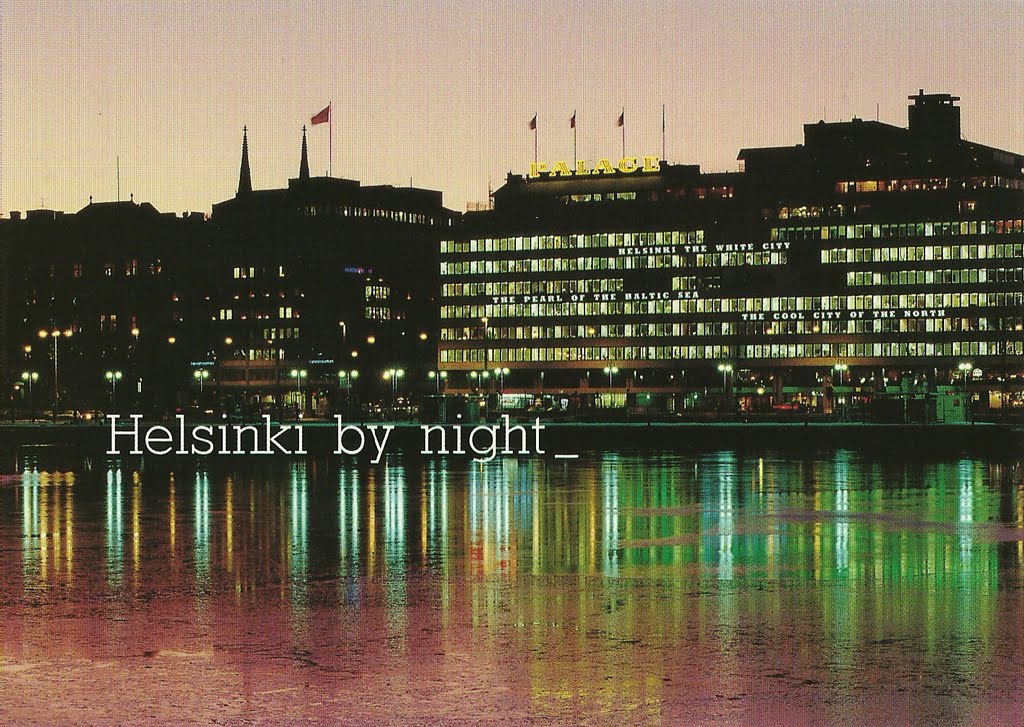
Helsinki by night


Helsinki is a sea-town par excellence and an exciting, dynamic place. Half the city seems to be water, and the tortured geography of the coastline includes any number of bays, inlets and a speckling of islands. The harbour is the heart of the city, and watching the giant ferries glide into port is a defining memory and essential Helsinki experience.

Helsinki is cool without - as yet - being self-consciously so. Unlike other capitals, you sense that people go to places because they enjoy them, not to be seen. Much modern décor is ironic and humorous, and achieves stylishness by daring to differ rather than trying too hard.

While not an ancient place, much of what is loveable in Helsinki is older. The style of its glorious Art Nouveau buildings, the spacious elegance of its cafés, the careful preservation of Finnish heritage in its dozens of museums, restaurants that have changed neither menu nor furnishings since the 1930s are all part of the city's quirky charm.

It has a very different feel to the rest of Finland, partly because before the days of the hi-tech society it was the country's sole point of contact almost with the rest of the world.

Like all of Finland, though, Helsinki has a dual nature. In winter you sometimes wonder where all the people are. In spring and summer they are back again, packing green spaces and outdoor tables to get a piece of blessed sun, whirring around on thousands of bicycles and kicking the city's nightlife into overdrive. [source: lonelyplanet]