donderdag 18 april 2013

Cayman Islands


Hurray for a new country: Cayman Islands! Making this the 101st country for my collection.


Three tiny islands make up the British Overseas Territory of the Cayman Islands, balanced precariously one side of the enormous Cayman Trench, the deepest part of the Caribbean. While synonymous worldwide with banking, tax havens and beach holidays, there’s much more to this tiny, proud nation, even if you do need to look quite hard to find it.

What’s so surprising about the Caymans at first is how un-British they are – it would be hard to design a more Americanized place than Grand Cayman, where the ubiquitous SUVs jostle for space in the parking lots of large malls and US dollars change hands as if they were the national currency. Only the occasional portrait of the Queen or a fluttering Union Jack ever begs to differ. This contradiction is just the first of many you’ll discover while getting to know these islands. The key to understanding what makes the Caymans tick is getting away from the crowded commercialism of Grand Cayman’s long western coastline and exploring the rest of the island. Better still, leave Grand Cayman altogether and visit the charming ‘sister islands’ of Cayman Brac and Little Cayman. Here life runs at a slower pace and the natural delights that see people coming back again and again – from bird-watching and hiking to diving and snorkeling – are never far away.

The Caymans may lack the dramatic scenery and steamy nightlife of much of the rest of the Caribbean, but in their place you’ll find a charming, independent and deeply warm people spread over three islands boasting many of life’s quieter charms. [source: lonelyplanet]


Thank you very much Gilles!

zondag 31 maart 2013

Smew


The smew is definitely one of the most striking ducks! Very nicely portraited/photographed I must say with the cool blue colors in the background.


This species breeds in the northern taiga of Europe and Asia. It needs trees for breeding. The Smew lives on fish-rich lakes and slow rivers. As a migrant it leaves its breeding areas and winters on sheltered coasts or inland lakes of the Baltic Sea, the Black Sea, northern Germany and the Low Countries, with small number reaching Great Britain, mostly at regular sites. On lakes it prefers areas around the edges, often under small trees.

The Smew (Mergellus albellus) is a small duck which is intermediate between the mergansers and the goldeneyes, and has interbred with the Common Goldeneye. It is the only member of the genus Mergellus (Selby, 1840). [source: youpet.com]


Thank you very much Daria!

Turks & Caicos


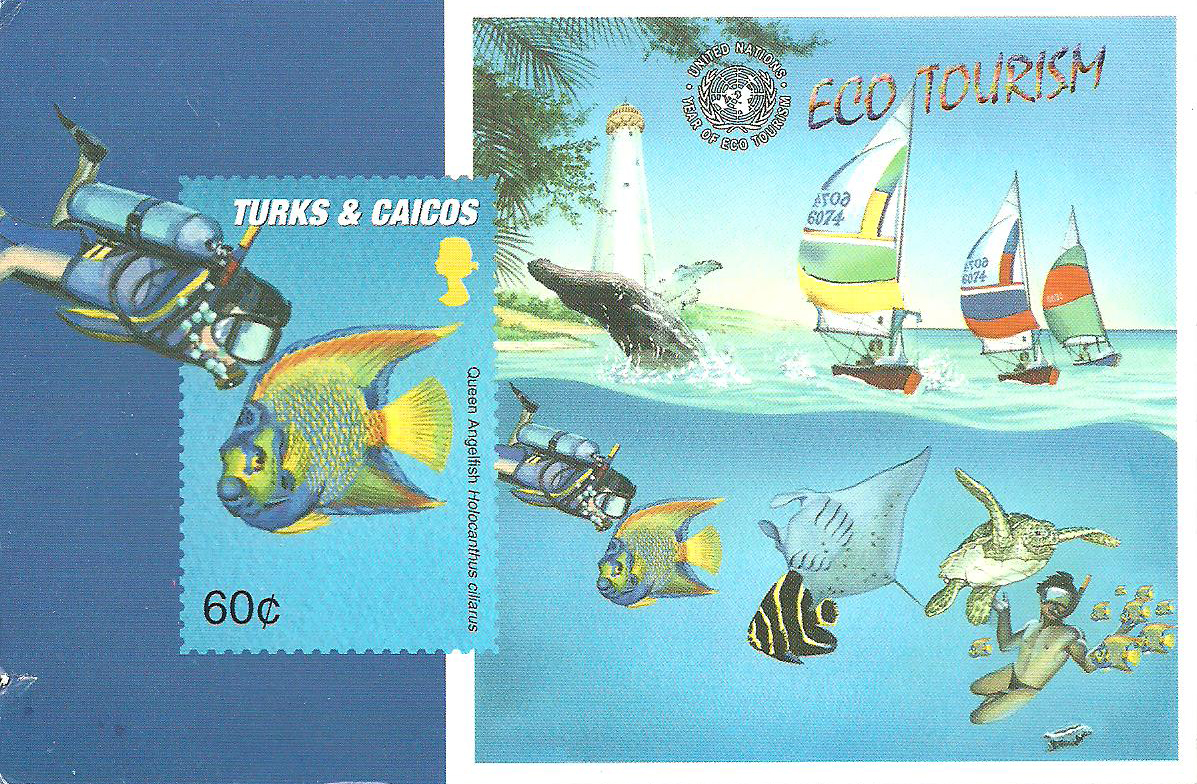
Hurray for new country and besides, a milestone: Turks & Caicos, which is the 100th country in my collection! A very exotic destination as can be derived from this postcard. White beaches with crystal clear water + a whole different world underwater.


The Turks and where? That’s the reaction most people have when you mention these tropical isles. Like all great Shangri-Las, this one is hidden just under the radar. Be glad that it is, as this tropical dream is the deserted Caribbean destination you’ve been looking for. And the best part – it’s only 90 minutes by plane from Miami; this slice of paradise is just around the corner.

So why would you want to go there? How about white-sand beaches, clear blue water and a climate that defines divine. Secluded bays and islands where you’ll see more wild donkeys than other travelers. Historic towns and villages that look like something out of a pirate movie, where life creeps along at a sedate pace. While development is on the rise, all one has to do is dig a bit deeper, catch a boat to the next island over and the solace of solitude returns: islands like Grand Turk (part of the Turks Islands) are set in a time long since past, with dilapidated buildings, salt ponds and narrow lanes, and contrast with the ever-expanding Providenciales, tourist gateway to the Caicos Islands.

Divers and beach aficionados will rejoice at the quality of the sea here. Clear warm waters teem with sea life, yet are devoid of crashing waves. Even the most ardent land lubber can’t help but be mesmerized by the azure water and golden sand. [source: lonelyplanet]


Thank you very much Gilles!

El Nido


El Nido is the gateway to Palawan's greatest natural treasure: the Bacuit Archipelago. El Nido itself commands a stunning location, sandwiched between towering limestone karst cliffs and Bacuit Bay, with the fantastic contours of Cadlao Island looming right offshore.

Unfortunately, the visitor to El Nido is literally caught between a rock and a hard place (excuse the pun), for the town itself is quite unprepossessing, with a collection of substandard accommodation and an overcrowded, hastily developed foreshore. Thus, if you want to visit the Bacuit Archipelago, you must choose between roughing it in El Nido, or shelling out big bucks for the accommodation in the archipelago itself. [source: lonelyplanet]


Thank you very much Ayn!

Beaty biodiversity museum


Only open for public preview visits, UBC's newest attraction showcases the university's wealth of natural history exhibits, including two million specimens that have never before been available for public viewing. Fossil, fish and herbarium galleries are included but the museum's main draw is the 25m blue whale skeleton, artfully displayed in a two-story glass gallery. The whale washed ashore on Canada's eastern coastline and was trucked across the country – to much media curiosity – in 2009. [source: lonelyplanet]


Thank you very much Alex!

woensdag 20 maart 2013

St. Maarten


Hurray for a new country: St. Maarten! And what an awesome awesome awesome card! As an aviation enthusiast, St. Maarten's airport is a spotters paradise and this place is highly noted on my list of must-visit countries. The creepy thing is that I was checking ticket prices for St. Maarten the other day and then this card arrives a day later... Something which is by the way interesting, is the fact the used stamp is very tiny. Definitely the tiniest one I've ever seen. Probably the reason why they forgot to put a cancellation on it as they had a hard time finding a stamp.


For hundreds of years the Caribbean was the colorful playground of wannabe imperialists who flexed their colonial muscles while transporting rum, slaves and gold between worlds. These faraway kingdoms would repeatedly conquer and retreat, radically changing the political geography with the spark of a cannon. After years of divvying up – and re-divvying up – these sand-strewn paradises like a game of Risk, only one of the 7000 islands in the entire Caribbean remained so dear to two separate empires that they decided to share it.

It’s easy to understand why this stunning island – known as St-Martin to the French, and Sint Maarten to the Dutch – has captured the hearts of many. A mere glance reveals conical, coolie-hat-like peaks rising dramatically from the depths of the ocean, and gentle cerulean currents that tumble landward to kiss the bleach-blonde sands.
Today, the allure goes deeper than the island’s natural gifts. The arbitrary division of land has given the scrubby island two very distinct personalities, like a set of Siamese twins. Although fundamentally one entity, both sides are engaged in an unconscious game of tug-of-war as they struggle to assert their individuality. At times they work as one, and in other instances they become a caricature of themselves by exaggerating the traits that makes them unique: the French cling to their European roots, as demonstrated by the food and local lingo, while the Netherlands Antilles side plays up their jammin’ attitude by appealing to the hedonistic pleasures of visitors. But, although neither side likes to admit it, the whole really is greater than the sum of its parts. [source: lonelyplanet]


Thank you very much Gilles!

Rhodes


I wish I could visit this magnificent place listed on the UNESCO list. Doesn't it look charming?


Rhodes (ro-dos in Greek) is the jewel in the Dodecanese crown. It’s big, brash and bold and receives by far the lion’s share of visitors to this island group. It’s open year-round and enjoys an exceptionally mild climate. It combines all that is needed in a holiday island: beaches, nightlife, culture, scenery, greenery and comfort. Like Crete, its larger neighbour to the southwest, it could almost exist independently of the Greek mainland.

Rhodes grows on you slowly. If you’re not captivated at once by the intriguing and almost magical World Heritage–listed old centre of Rhodes Town with its labyrinthine back streets and medieval fortifications, you will be by the dreamy beaches, snaking mountain roads, wild almost untouched interior and rocky mountains. The best dining and accommodation is found on Rhodes.

The island is also the focal point for most regional transport and you will almost inevitably pass through the island at some stage. [source: lonelyplanet]


Thank you very much Milda!